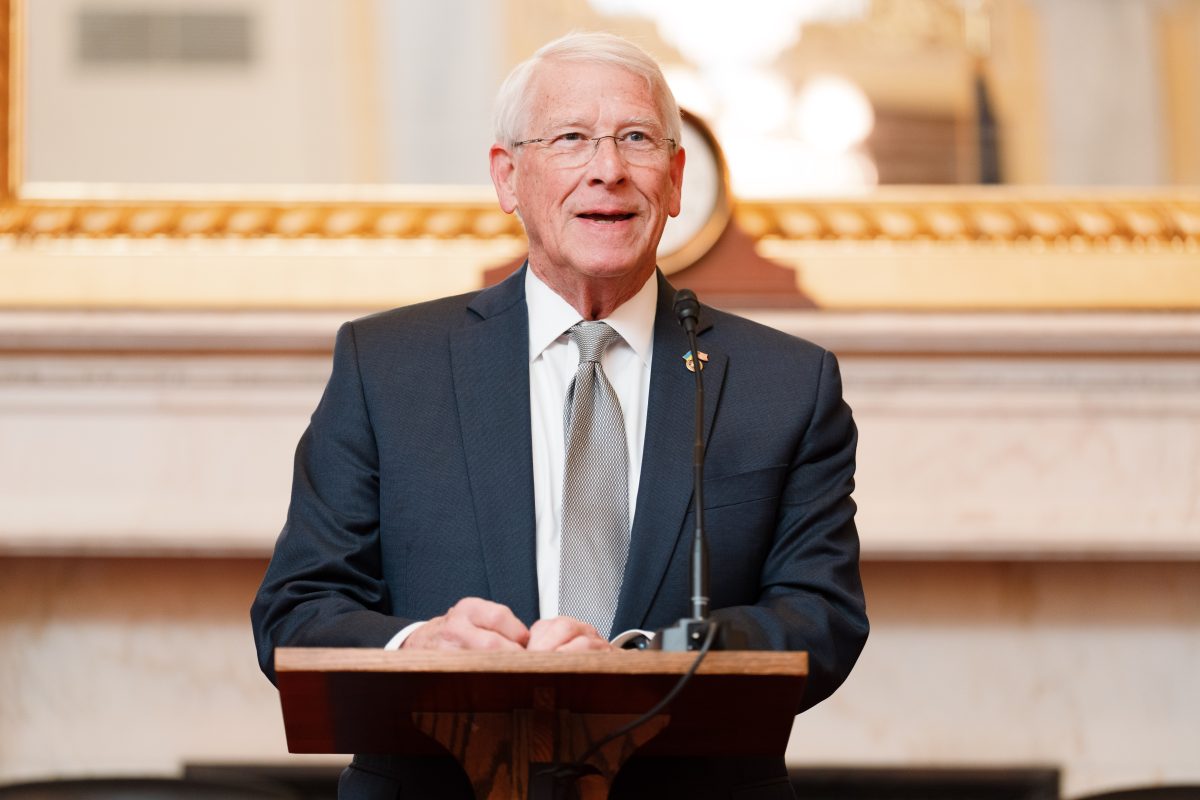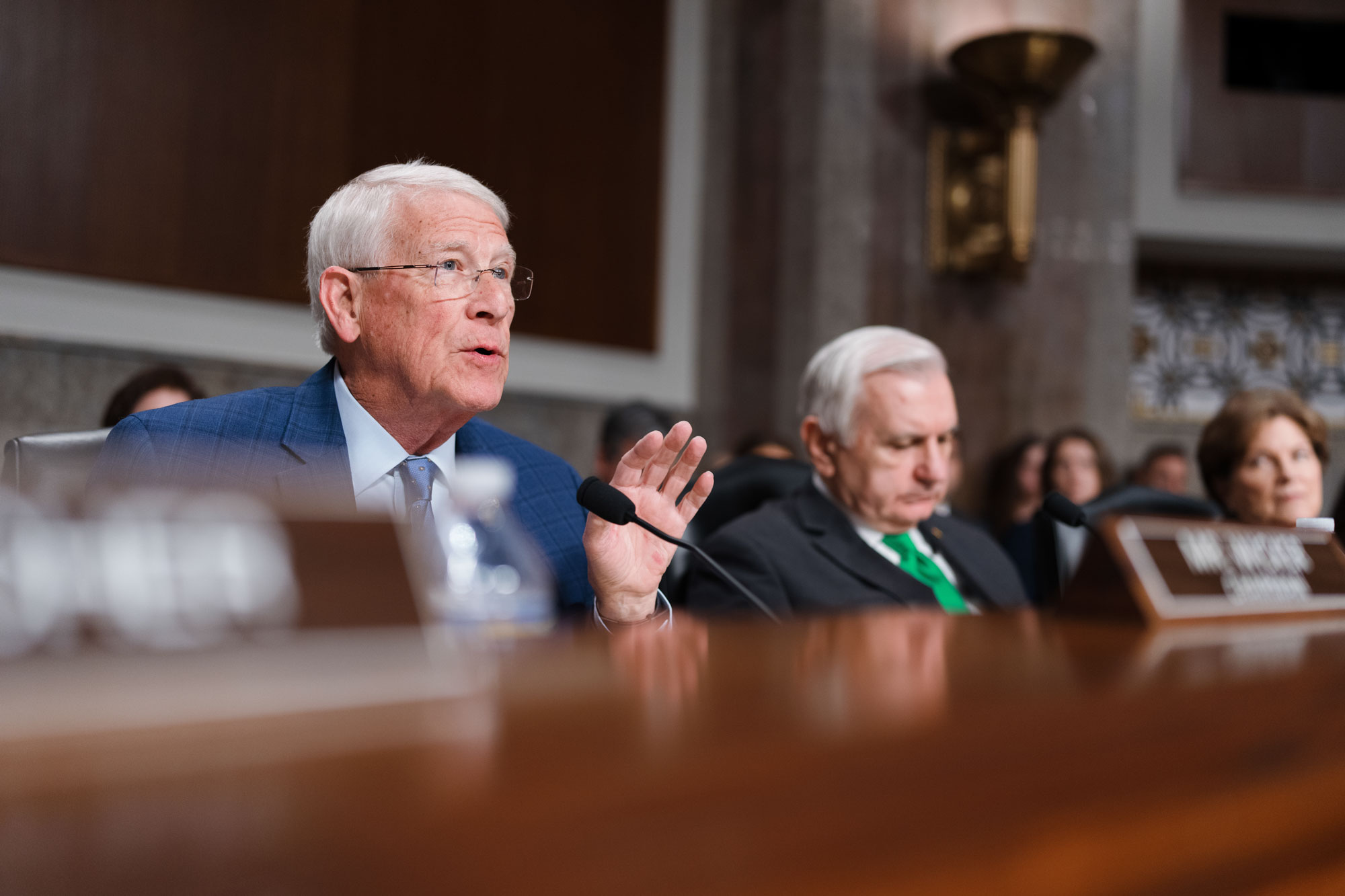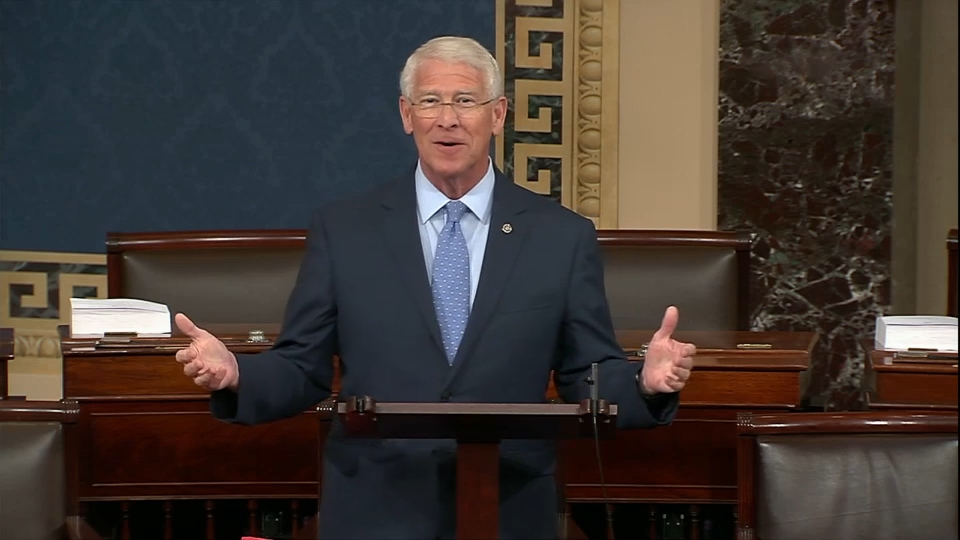
WASHINGTON – U.S. Senator Roger Wicker, R-Miss., Chairman of the Senate Armed Services Committee, today led a hearing to examine the posture of U.S. Indo-Pacific Command and U.S. Forces Korea amid growing global instability, including ongoing conflicts in Ukraine and the Middle East, and increasing strategic competition in the Indo-Pacific driven by China’s military expansion and coordination among authoritarian adversaries.
Admiral Samuel J. Paparo, Jr., USN, Commander, United States Indo-Pacific Command, and General Xavier T. Brunson, USA, Commander, United Nations Command/Combined Forces Command/United States Forces Korea, appeared before the committee.
In his opening remarks, Chairman Wicker highlighted rising threats in the Indo-Pacific from China, North Korea, and Russia. The Chairman reiterated that the Chinese Communist Party remains our most significant adversary as the leader of the Axis of Aggressors. He also highlighted the importance of getting low-cost munitions and drones at scale to Admiral Paparo as soon as possible as well as the importance of our alliances in the region.
Read Chairman Wicker’s hearing opening statement as delivered.
This hearing will come to order. This morning, we hold a hearing on the posture of U.S. Indo-Pacific Command and U.S. Forces Korea. At the outset, I would like to thank Admiral Paparo and General Brunson for their distinguished service to our country. This committee appreciates their service, and we are grateful for the ethos that has long been the defining characteristic of America’s general and flag officers. Thank you gentlemen.
We speak today and we meet today at a time of global turmoil. Despite the doubts of our own intelligence community and many others, Ukraine continues to outperform conventional wisdom—now in the fifth year of Putin’s illegal war of choice. In the Middle East, President Trump has taken decisive action to end 47 years of aggression by the ayatollahs.
But amid those wars, we must remember this: China is the leader of the Axis of Aggressors. The People’s Republic of China intends to and is capable of preventing an American-led 21st century. We cannot ignore the implications of Xi Jinping’s aggression.
The Chinese Communist Party and its People’s Liberation Army have spent decades studying the American way of war. This has informed their massive military modernization effort. The PLA now fields the world’s largest Navy. Its nuclear triad is growing at a breathtaking pace, and it possesses an increasingly capable air force armed with world-class munitions. China’s military strategy has transitioned. It has moved from a mostly asymmetric competitive approach to a more comprehensive strategy. Their goal is to achieve decisive advantage over the U.S. and its allies in the Indo-Pacific.
We also recognize the danger posed by a nuclear armed North Korea. Kim Jong Un is a cruel and ruthless despot. Worse, he possesses nuclear weapons and he possesses the means to deliver them. He has demonstrated a high tolerance for risk-taking, and he is backed by his nuclear-armed partners Xi and Putin. The North Korean army has gained valuable insights on modern warfare from its experience supporting Russia’s invasion of Ukraine. North Korea will remember what it learned from drone and missile use in Ukraine. It continues to learn lessons. Right now, it is thinking about how to employ these capabilities on the Korean Peninsula.
Russia has repaid Kim for supporting its illegal invasion of Ukraine by providing North Korea with advanced military technology and financial relief. While Vladimir Putin creates mayhem in Europe, it is not lost on this committee that he also actively works to undermine the existing order in the Indo-Pacific. Putin has revitalized his partnership with the Kim regime, and he has deepened Russia’s Comprehensive Strategic Partnership with Xi and the Chinese Communist Party.
The growing alignment of our adversaries throws into sharp relief the enduring importance of America’s allies and the way they help protect our strategic interests. For decades, our alliance bonds—including NATO—have provided a comparative advantage over authoritarian states like China, North Korea, Russia, and Iran. These alliances continue to pay dividends for the United States. People need to stop saying otherwise. It is not helpful when American leaders speak of our alliances with derision, but we must be clear about the numerous political, strategic, and moral benefits that our country receives from its alliances.
Some have suggested that our allies have become little more than dependents of the United States. These skeptics argue that the United States must shift the burden- and that word, “shift” is what I have a problem with. They argue we must shift the burden of defense and deterrence from the United States and onto our allies in Europe and Asia. I do not agree with the skeptics. Of course, I am glad to see America’s allies stepping up, as they are doing all over the world. But there’s a difference between burden shifting and burden sharing.
The president has called for increased burden-sharing, and I support that. But the way we execute that vision matters. We Americans have a massive stake in maintaining a favorable balance of power in both Asia and Europe. It remains a vital interest of the United States and cannot yet be delegated to others, not even to our closest allies. Burden shifting suggests that the United States has a limited stake in conflicts that erupt—or could erupt—in these key regions. Burden shifting implies abdication, rather than collective responsibility.
Upholding our interests in the Indo-Pacific requires the cultivation of a robust alliance network—what we call burden sharing. Which I agree with. The western Pacific is far from the American homeland, and that distance has long placed a premium on a strong and persistent forward presence in the region. This presence allows us to defend our interests in the Indo-Pacific and to project power from there into other regions of the world.
It is worth noting that America’s alliance network is comprised of like-minded democracies and free-market economies. The importance of this fact cannot be overstated. Unlike our authoritarian countries, the foundation of the U.S. alliance network is built upon the explicit support of its respective electorates. Our alliances depend on each nation’s internal, domestic political support. Again, this is crucial. Every military alliance requires negotiation and compromise. Every military alliance requires negotiation and compromise. Alliances are, by definition, a two-way street. They require patience, an appreciation for the political drivers of the parties, and a willingness to undertake political, military, and economic risk on behalf of one another. Popular support from free people gives legitimacy to those necessary compromises.
We must continue to modernize our alliances to match today’s threats and capabilities.But any reforms should make us stronger and safer. They should not detract from the strategic imperative of deterring aggression and coercion by China, North Korea, or Russia.
I look forward to hearing how our witnesses are working with our Japanese, South Korean, Filipino, Australian, and Taiwanese allies, among others, to strengthen our strategic position in the Indo-Pacific.